
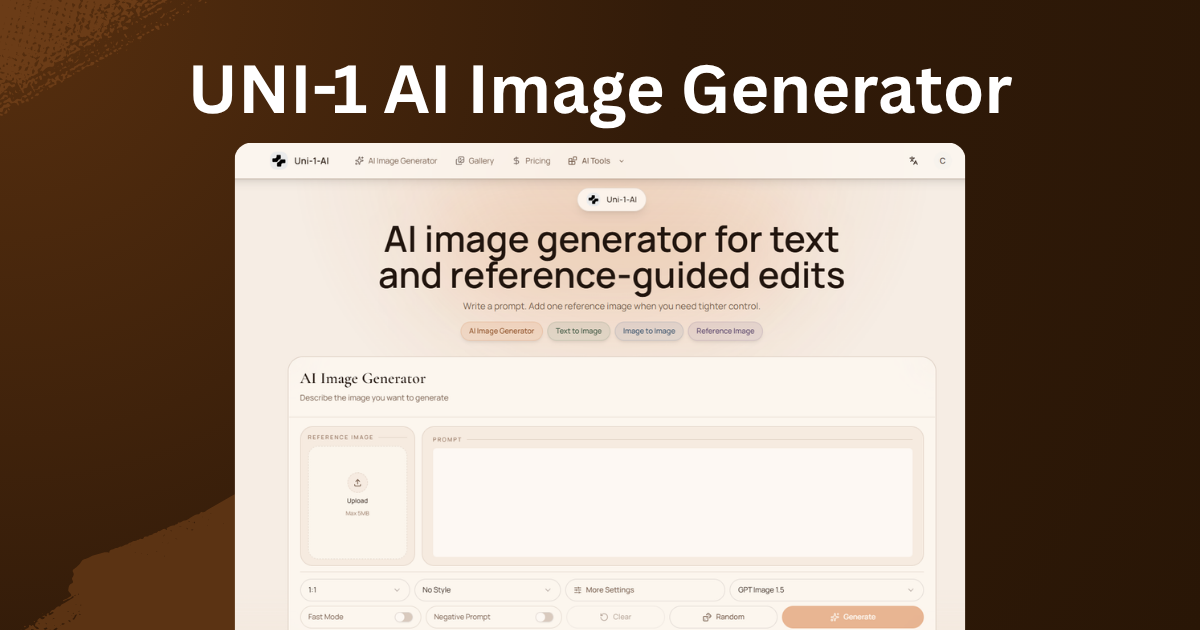
Based on how Luma AI talks about UNI-1, the appeal comes down to three things: tougher prompt handling, closer reference control, and better range across styles. People look for UNI-1 because they want a model that stays on brief when the request gets harder.
UNI-1 handles messier prompts The pitch is not just prettier images. UNI-1 is mainly about fewer dumb misses when the prompt has multiple constraints, not one simple subject or one loose visual idea.
UNI-1 holds onto the reference If the face, product, or layout actually matters, UNI-1 gets interesting because you usually want less drift, not more surprise. That tighter anchor is the point.
UNI-1 keeps busy scenes usable Multiple objects, tighter layouts, ad-style compositions, product props. This is where weaker models usually start guessing.
UNI-1 switches styles without falling apart Manga, glossy product shots, meme-ish edits, editorial looks. The draw is range without losing the subject every time you push in a new direction.
UNI-1 vs Nano Banana Pro UNI-1 and Nano Banana Pro overlap, but they do not feel the same. UNI-1 is the better fit when you care about prompt handling, reference control, and visual direction. People searching UNI-1 are usually trying to keep the brief intact. Nano Banana Pro looks stronger when the job is conversational editing, multi-image composition, or polished production assets.
UNI-1 for harder prompts This is the more interesting direction when the prompt stacks several constraints and you want the model to keep up.
UNI-1 for reference control This is the stronger fit when identity, product details, and layout anchors need to stay closer to the source.
UNI-1 for style range This is also what people search when they want to jump between product, editorial, manga, and meme-adjacent looks without fully losing the subject.
Nano Banana Pro for chatty edits Google's Nano Banana Pro feels more like a back-and-forth image editing workflow where you talk the result into place.
Nano Banana Pro for multi-image work Nano Banana Pro also looks better suited to multi-image composition and more directed merge-style tasks.
Nano Banana Pro for finished assets If the goal is text-heavy outputs or production-ready assets, Nano Banana Pro looks like the safer comparison point.